



The voice of a senior Polymarket user: In fact, we have already been surpassed by our competitors
 Core Viewpoint
 The once defining force on the racetrack is now becoming a follower of the competitors' rhythm. The era of startup makeshift platforms is over; please present a financial-grade platform as it should be.
Author: Jonah
Compiled by: Jiahua, ChainCatcher
I have been holding onto this article for a while.
I have always wanted to write it, but I kept holding back, hoping things would quietly correct themselves. Until this morning when Bloomberg published "Polymarket Loses Lead in Prediction Markets Due to Delays and Rebounds." To be honest, this report has already articulated most of what I wanted to say. So I will quote it extensively to help share some of the weight.

Polymarket is facing increasing operational setbacks in its attempt to reach key audiences (U.S. customers) and has now fallen behind its main competitors. From bloomberg.com
This headline is quite painful. It should be.
Since mid-2024, I have been observing Polymarket. I agree with its vision, defending the platform during every regulatory panic, and recommending it to every trader I know. Prediction markets are one of the most important financial infrastructures of this decade, and Polymarket is the company I have always hoped would win this race.
So this is not an aggressive article. It is the kind of letter you write about something you genuinely care about.
Shayne Coplan and the entire team, we need to talk.
The Current Situation is Harsh
Let’s start with the data.
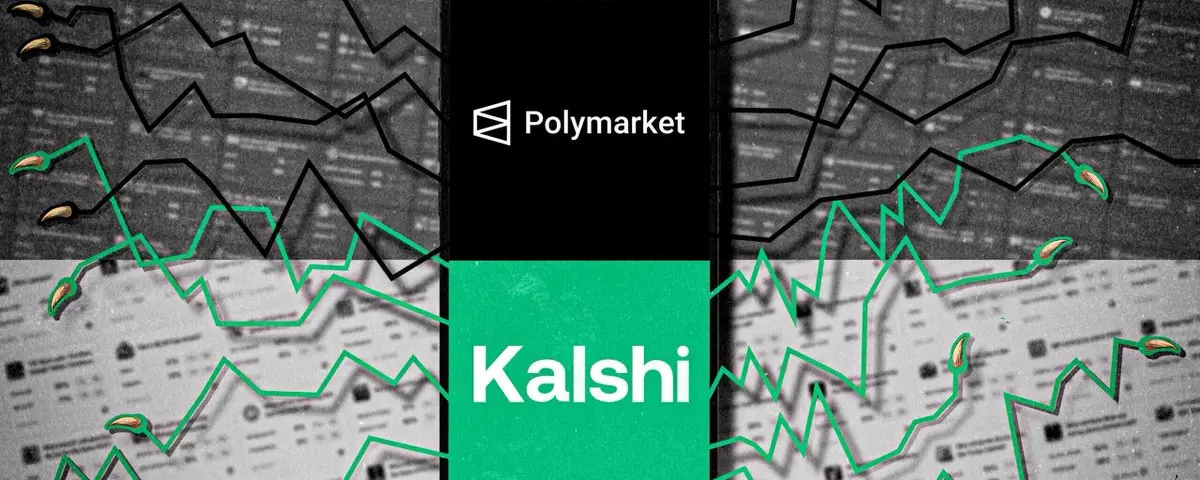
Reports indicate that Kalshi is valued at around $22 billion, while Polymarket's negotiation valuation is about $15 billion. This is a gap of approximately $7 billion for a competitor that was once far behind Polymarket. Year-to-date trading volume: Kalshi around $37 billion, Polymarket around $29 billion. U.S. market share: Kalshi close to 90%, while Polymarket remains stuck on the waiting list.
A year ago, the mainstream narrative was still "Polymarket is the dominant player in prediction markets, Kalshi is the regulated stepson." Today, the narrative has completely reversed. Kalshi has become the compliant, fast-delivering option with institutional credibility, while Polymarket has become the crypto-native veteran that keeps tripping over itself.
This lead was something we had firmly in our grasp. Now, we are throwing it away.
The Platform Itself is Not Fully Operational
Let’s be frank: there are real issues with the core product, yet the company behaves as if everything is fine.
Last weekend, Polymarket postponed the migration to CLOB V2, the new pUSD collateral token, and the rebuilt matching engine by at least a week. To be fair, the delay itself was the right decision. The developer community has been shouting for weeks that there simply isn’t enough time for a clean migration integration. Pushing a half-finished product live would have far worse consequences than delaying it.
So the delay is not a problem; in fact, it is a good thing.
What is awkward is the way the announcement was made.
From what has circulated in the community: the news of the delay was first sent out on Twitter, but the initial formal migration announcement containing the migration guide hadn’t even been released yet. The subsequent migration guide referenced outdated dates. Then, another correction was issued on top of that.
Structurally, this is precisely the kind of communication chaos that a "well-organized operational machine" should not produce.
Then on Monday, a restart that was supposed to take five minutes ran for over an hour. The exchange was effectively offline during peak hours on a weekday. Just another small issue piling on top of the problems.
As Bloomberg quoted a Polymarket spokesperson: you cannot "build the most interesting consumer finance product of the past few years without making yourself a well-organized operational machine." This statement is correct; that is the vision. But the reality is that this machine keeps malfunctioning over some avoidable small issues, and these small issues are accumulating into a pattern.
And these are not isolated incidents:
- Adjustments to fees in the sports and crypto markets appear reactive and poorly communicated.
- The team has postponed the migration that was announced months ago repeatedly.
- Scheduled maintenance windows have consistently exceeded the stated duration.
- The U.S. application has been stagnant in the "mobile-only, sports-only, invitation-only" testing phase for several months, with reportedly millions still on the waiting list.
"Crypto-native" should mean more transparency, resilience, and accountability than traditional platforms, not serve as a shield for poor UX and unreliable infrastructure.
The community is patient, but patience is clearly not infinite. Every outage, every missed deadline, every vague status update pushes marginal users toward the competitor that "just works."
The Order of Priorities is Wrong
What really broke me yesterday was this.
The platform is objectively not at 100% capacity. The exchange upgrade has been postponed. The U.S. application is not fully open. A million people are stuck on the waiting list. Traders on the global product were still experiencing outages on Monday afternoon.
Then yesterday, Polymarket announced the launch of perpetual contracts.

We are pricing for the future. Now you can leverage it. Perpetual contracts are coming to Polymarket. Sign up for early access.
Perpetual contracts are a great product and definitely worth including in the roadmap in the long run. But announcing it now, or even just announcing it—just days after the infrastructure upgrade was postponed and a restart severely overran—while the U.S. application is still in testing—conveys only one message to most community members: a cash grab.
Perpetual contracts are the highest fee, highest leverage, and highest volume products in the crypto space, the fastest path to extract revenue from existing users. Announcing it while the core exchange is still unstable and a million Americans are still locked out clearly indicates where the team's true priorities lie: monetize existing traders first, deal with the platform later, and push the concerns of those locked out even further back.
Whether intentional or not, this is the signal sent by this move. Revenue coverage takes precedence over product stability. Producing new fee-generating products takes precedence over refining already launched products. Harvesting existing users rather than fixing the experience for everyone—both current and waiting.
Honestly, interpreting this as a "cash grab" might even be polite.
Look at this order. Kalshi announced its crypto perpetual contract product "Timeless": specific date, specific venue, specific launch event—April 27 in New York, a complete product, delivered a week later.

Breaking: The first CFTC-regulated prediction market exchange in the U.S. @Kalshi has chosen Pyth Pro as its exclusive data layer for its commodities market. Gold, silver, oil, natural gas, copper, corn, soybeans, wheat. This is why it matters.
Within days, Polymarket's response was… a registration page for early access. No release date, no venue, no product specifications, no product itself. Just a marketing tweet, a slogan "We are pricing for the future, now you can leverage it," and a form to collect accounts.
That was not a product launch; it was a press release disguised as a launch event. When you pull out something to respond to a competitor that is clearly content-empty, you are no longer setting the pace in this race—you are chasing someone else's pace. And you still have to wait in line?
This is a track defined by Polymarket itself. Polymarket was once a pioneer, a cultural phenomenon, a reigning champion with years of first-mover advantage. And today, in the matter of derivatives releases, Polymarket has become the one chasing, using a registration form as PR material, simply because Kalshi announced first.
This is the most embarrassing line in the entire letter, but it is also what Bloomberg's report is truly addressing.
The operational sequence should be very simple:
- U.S. Application. Fully open, remove the waiting list, stable operation, complete functionality. This is the biggest lever Polymarket has, yet it has been locked for several months, allowing Kalshi to gnaw at the U.S. retail market. This must be the top priority. Not second, but first.
- Core Platform Reliability. Complete the CLOB V2 migration, transition to pUSD cleanly, do not miss maintenance windows, make the exchange something traders can "set and forget."
- Then, only after this, expand the business scope. Perpetual contracts, new market categories, other items on the whiteboard.
The current order is reversed, and the community sees it clearly.
The Startup Phase is Over
Bloomberg's article has brought to light what the community has been discussing for months: delays, distractions, and a culture that still resembles a 2021 wild startup—despite Polymarket now sitting on billions of dollars in open contracts, a major partnership with ICE, and a CFTC-designated exchange qualification obtained through the acquisition of QCEX, along with a partnership with MLB.
That era of wild startups is over; it must end.
You are no longer facing a forum or a niche crypto application. You are facing a competitor with a CFTC license, institutional backing, and New York roots, delivering products on time and taken seriously by regulators, trading counterparts, and the media.
This is the maturity phase that every phenomenal financial company must endure. Coinbase has endured it, Stripe has endured it, and every serious trading venue must ultimately stop operating like a "group chat" and start becoming—borrowing the spokesperson's own words—a well-organized operational machine.
Specifically, this means bringing in truly mature professionals in operations, risk control, and public relations. It means cutting out distractions that do not serve U.S. promotion and core stability. It means over-communicating when things go wrong, providing real retrospectives and true accountability, rather than one or two brief status updates followed by silence.
These are not hostile demands. This is what every serious financial venue must ultimately do. Polymarket is now one of them. Show the necessary professionalism.
Why I Still Believe in Polymarket
That said, here’s why I haven’t left this platform and why I don’t think this race is over.
ICE is on your side. Jeffrey Sprecher will not write a check for a vapor project. The parent company of the New York Stock Exchange, Intercontinental Exchange, led a funding round last fall, a signal that the market has not fully priced in yet. You now have direct access to one of the most mature market infrastructure operators in the world. Use it well.
The MLB partnership is a game-changer. This signal indicates that the endgame here is not "just another betting app," but making prediction markets a mainstream, embedded financial infrastructure within institutional systems. Sports leagues, television networks, and traditional financial tracks all funnel into the same order book; this is groundbreaking. Kalshi clearly does not have this cultural reach.
The brand is iconic. Regardless, in public perception, Polymarket is almost synonymous with prediction markets. The election cycle has solidified this, with the platform being repeatedly cited by journalists, hedge funds, and memes. This is a moat that most companies can only dream of.
The community is still here. Those who emerged in the early market, scaled up during the 2024 election, and stood by the platform through all its growing pains have not left. We want to win, and we want to see you win. That’s why we are writing this letter now instead of quietly migrating our trading volume to another platform.
Bring Home the Victory
The truth is: Kalshi is winning this quarter, and possibly this entire year.
But Polymarket can still win this decade. The brand, partnerships, community, regulatory front obtained through QCEX, and the relationship with ICE are all still intact; nothing has been lost. They just haven’t been fully utilized while the team pushes the wrong things in the wrong order.
So the appeal is simple.
Fix the platform. Launch the U.S. application. Do not announce new products until the old ones are stable. Truly become the well-organized operational machine that the spokesperson describes.
The community still stands with you, and the believers are still here. But the window to close the gap is narrower than it was six months ago, and it will be even narrower in another six months.
First, fix the platform. Then, bring home the victory.
A long-time Polymarket user writes this, hoping more than anyone else that in the future, there will be no need to write such a letter again.

 Risk warning