



ENI's RWA ambition: to create an enterprise-level BaaS platform that allows Web2 institutions to "go beyond just asset on-chain."
 Core Viewpoint

 What are the differences between RWA 1.0 and RWA 2.0?
Author: momo, ChainCatcher
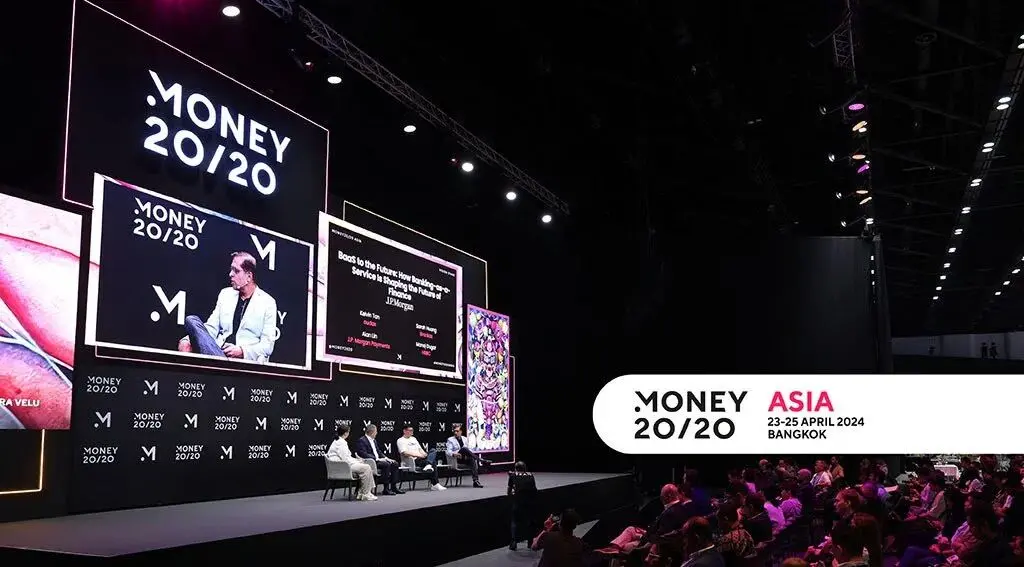
At the recently concluded Hong Kong Blockchain Week RWI Summit, Arion Ho, founder of the RWA infrastructure project ENI, launched a $1 million global acceleration program together with Hong Kong Legislative Council member Wu Jietzhuang and Casper, CEO of the well-known Hong Kong incubator Web3Labs. At the same event, ENI also signed a strategic cooperation agreement for institutional-level RWA and digital asset treasury with the licensed financial group Ad Financial.

This was not an isolated appearance. Not long ago, ENI reached a cooperation with Republic Crypto, which is backed by institutions such as Hamilton Lane, Hashed, and Morgan Stanley, covering over 2,500 enterprises in its ecosystem. In less than a month, within just a few weeks, ENI has completed a "triple play" of endorsements from the political sphere, cooperation with traditional financial institutions, and connections with top crypto capital.
However, more noteworthy than these frequent actions is ENI's ambition for RWA.
ENI is an enterprise-level modular L1 aimed at large-scale commercial scenarios, emphasizing unlimited TPS processing capability, and is currently extending from a foundational network to an enterprise-level BaaS platform.
Unlike traditional public chains that focus on asset issuance and trading, ENI emphasizes "how systems operate on-chain"—by integrating enterprises' assets, cash flows, and business processes on-chain through a foundational settlement network (ENI), a payment and authorization layer (ENI PAY), and an AI Agent execution system, achieving continuous operation within a compliant framework.
Based on this, ENI has also provided its judgment on the next phase of RWA: RWA 2.0 is no longer just about "asset on-chain," but rather the continuous operation of a business system driven by AI Agents on-chain. ENI aims to become the "chief architect" of Hong Kong 2.0.
What market opportunities has ENI identified? How does it plan to achieve this goal? During Hong Kong Blockchain Week, its founder Arion Ho was interviewed by ChainCatcher.
From "RWA Public Chain" to "Enterprise-Level BaaS Platform"
To understand ENI's path, one must first discuss the background of Arion Ho.
He is not a typical crypto entrepreneur. Before entering Web3, Arion worked for a long time in the traditional financial system, holding positions at institutions such as the Hong Kong Stock Exchange, UBS, and Standard Chartered, accumulating over twenty years of experience. He then entered the regulated digital asset space, working at OSL and Zodia Markets under Standard Chartered, standing at the intersection of traditional finance and the crypto world.
It was precisely from this position that he gradually recognized a structural contradiction that has been repeatedly overlooked: on one side is the stable, compliant traditional financial system that can support the operation of the real world; on the other side is the rapidly innovating Web3 world, which remains more focused on the "trading" level.
The issue is not which side is more advanced, but rather that they address completely different propositions.
In Arion's context, the current RWA 1.0 supported by most blockchain infrastructures is essentially "tradable," meaning assets can be transferred, priced, and circulated; however, they are far from being "operational," unable to support complex business logic, long-term operations, and compliance systems. RWA 2.0, as defined by ENI, aims to solve the latter.
"For institutions, the real key has never been 'can it go on-chain,' but whether the system can operate stably for years or even decades, who controls the ledger, who sets the rules, and who is responsible when problems arise. These issues have hardly been addressed directly in the existing mainstream public chain systems."
Whether it is Ethereum or Solana, their original design intent was not to serve complex enterprise-level scenarios: privacy and performance are difficult to reconcile, compliance and control cannot be embedded, and institutions find it challenging to smoothly transition while retaining their original governance structures.

This led Arion to a relatively counterintuitive conclusion: "The ones that truly need blockchain are not the crypto-native projects, but those entities that already possess real assets, stable cash flows, and mature business systems—publicly listed companies, asset management institutions, and cross-border enterprises." What they need is not a "ticket to go on-chain," but a set of business systems that can operate long-term.
From this perspective, the market space also begins to become clear. Market data shows that the global enterprise-level blockchain market size is expected to reach approximately $57.7 billion by 2025, and is projected to exceed $1.4 trillion by 2030. The next five years are widely regarded as the golden growth period for this sector, representing a trillion-dollar blue ocean market that is still in its early stages but has enormous potential.
ENI initially entered the market as an "RWA public chain." However, as the product continued to iterate and the team engaged with more traditional institutions, they gradually realized that merely providing a chain was far from sufficient.
During the recently concluded Web3 Festival, ENI completed a key self-redefinition, shifting from "enterprise-level RWA public chain" to "enterprise-level blockchain BaaS platform."
Behind this change is a re-understanding of its own role. Arion explained that the name ENI comes from ENIAC, the first general-purpose computer in human history, symbolizing the transition of computing from theory to infrastructure.
In his view, today's blockchain stands at a similar juncture. What ENI aims to do is not to create a "faster chain," but to provide a complete set of system capabilities that allow enterprises to truly "run their business on-chain."

How to Build the "Bridge" Between Web2 and Web3?
"Bridge" is a keyword that almost all RWA projects mention, and ENI is no exception. However, in Arion's view, in complex enterprise-level scenarios, a "bridge" cannot just be a technical module; it must be a complete system engineering.
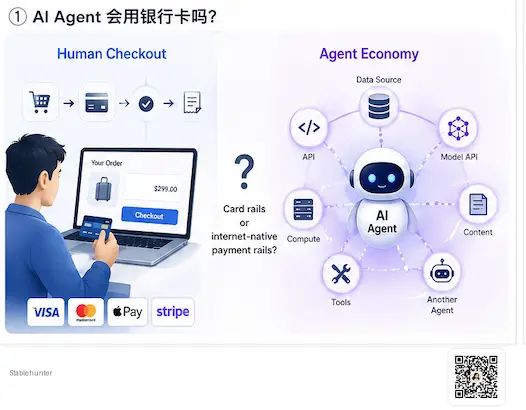
With the introduction of AI Agents, the complexity of the issues is increasing. Arion mentioned that if past blockchains primarily served "human" transactions, then future systems are likely to be "humans define rules, machines execute transactions." In this structure, the on-chain system not only needs to handle assets but also needs to carry automated business logic, from order generation and fund scheduling to settlement and auditing, all completed by AI.
This means that a single "chain" is no longer sufficient. ENI's solution revolves around this change.
From an architectural perspective, ENI has not remained at the single-layer design of traditional public chains but has built a layered system structure, breaking down "operation" into three key links: execution, payment, and settlement.

The top layer is the AI Agent execution layer. At this layer, humans only need to define rules and strategies, while specific transactions, calls, and business processes are automatically completed by AI. ENI has reserved support capabilities for Agents at the foundational layer, allowing them to directly call on-chain resources rather than remaining at the level of off-chain tools.
The middle layer is the ENI PAY payment and authorization layer. ENI PAY is the core product newly incubated within the ENI ecosystem and serves as the official payment gateway connecting the on-chain and off-chain worlds. ENI provides foundational chain and settlement capabilities, while ENI PAY offers payment services, handling payment settlement and authorization functions for the real world. This payment layer is a missing link in most current public chain systems. In the past, assets could be transferred on-chain but struggled to enter real payment networks, making continuous business circulation impossible. ENI PAY was born to solve this gap, bridging the "last mile" between transactions and settlements, providing executable payment capabilities for AI Agents and enterprise systems. From a practical standpoint, ENI PAY has already begun to possess real-world interface capabilities, supporting multi-country QR code payments, connecting to Visa and Mastercard networks, and offering virtual and physical card services. This means that on-chain assets are no longer just "tradable," but can directly enter consumption, settlement, and cross-border circulation scenarios.
The bottom layer consists of the ENI settlement layer and AppChain architecture. Unlike the public chain design of a single shared ledger, ENI provides each institution with an independent ledger environment through the AppChain approach, allowing them to customize rules, audit paths, and compliance modules, while achieving cross-chain settlement and unified security through the mainnet.
A direct change brought about by this structure is that institutions no longer need to accommodate public chain rules but can access on-chain systems while retaining their governance structures.
When comparing this entire system with mainstream public chains, a clear distinction emerges: public chains represented by Ethereum and Solana essentially provide "ledger + execution environment"; whereas ENI attempts to provide a complete system of "execution + payment + settlement," which is closer to the form of traditional financial infrastructure.

This difference is also beginning to manifest in actual collaborations.
Currently, ENI has already partnered with traditional asset management institutions, including JLL, to explore systematic operation methods for large projects on-chain. In scenarios like the Northern Metropolis, what is going on-chain is no longer a single asset, but a complete business system that includes land, cash flows, financing structures, and operational rules.
This may also be why ENI repeatedly emphasizes the "system layer." The significance of the "bridge" is no longer just to connect two ends but to enable this system to operate continuously.
Anchoring in Hong Kong, ENI's Institutional Cooperation Landscape Accelerates Expansion
If the first two parts answer "why do it" and "how to do it," then a series of actions since the mainnet launch indicates that ENI is attempting to answer a third question: whether this system has truly begun to operate.
From the on-chain ecological data, this system has already begun to form a preliminary operational scale: the current number of on-chain addresses has exceeded 3.6 million, with daily active addresses around 17,000; TVL has reached over $82 million, and the number of transactions in 24 hours remains stable at around 32,000.
However, compared to emphasizing short-term trading volume or on-chain activity, ENI prefers to disclose "system-level indicators," including network stability, node operation status, and enterprise access progress. From the information currently disclosed, its foundational network has already achieved tens of thousands of TPS processing capability and can support multi-chain parallel AppChain deployments, allowing the chain to gradually possess the capability to carry real business systems.
What truly reflects ENI's "acceleration" is happening on the institutional side. In recent times, ENI's partners have shown a clear trajectory of change, with cooperation with traditional finance and real economy entities accelerating.
During a roundtable discussion at the recent Hong Kong Web3 Festival, ENI revealed several key partners, each corresponding to different roles that interlock within the RWA system, from asset supply and structural design to compliance undertaking and fund organization, forming a complete chain that is gradually taking shape.
Capital and distribution entry represented by Republic Crypto. These institutions naturally connect Web3 projects with global funds, resembling a funding organization network that has been operating for many years. It was repeatedly mentioned in the roundtable discussion that RWA currently does not lack assets; the real bottleneck lies in how funds can be effectively organized and allocated to assets. The significance of Republic is to bridge the on-chain and off-chain funding sides, ensuring that assets are not just "able to be issued," but that "there are buyers and liquidity."
Licensed financial institutions represented by Ad Financial. This type of cooperation addresses the most core and practical threshold of RWA, namely trust and compliance. Compared to the technology itself, institutions are more concerned about whether the assets have a clear legal structure, whether the on-chain representation can map to real-world ownership relationships, and whether the entire transaction process is within the regulatory framework. In other words, these institutions are integrating the "on-chain system" with the "real legal system," providing the foundation for RWA to be accepted by mainstream finance.
Traditional asset management and operation entities like JLL represent the capabilities of the asset and operation sides. This not only means that there are real assets that can go on-chain but, more importantly, that they possess complete capabilities from asset selection and structural design to subsequent cash flow management. As mentioned in the roundtable, the key to RWA is not simply asset tokenization, but how to ensure that the returns, distribution, and operational mechanisms behind the assets can operate continuously. The participation of such institutions means that the chain is not just the "issuance side," but is beginning to extend to the "operation side."
Additionally, there are also key participants like Ink Finance, which are more oriented towards the "middle layer." Their role is to bridge the traditional financial architecture and the on-chain system: determining which parts are suitable for going on-chain and which should remain off-chain, and achieving a gradual transition through layered structures (such as feeder funds). The existence of this layer allows RWA to expand gradually under real constraints instead of needing to go "fully on-chain" all at once.
In this acceleration process, Hong Kong's role becomes particularly crucial. On one hand, the regulatory environment is rapidly clarifying. In February of this year, the 42nd document from eight ministries in China opened a compliance channel centered on a filing system for the overseas issuance of domestic assets as RWA, making the expectations for institutional entry clearer.
However, for ENI, the deeper reason for choosing Hong Kong as a "fortress" lies within the team itself. Founder Arion Ho has long been rooted in the Hong Kong financial system, accumulating experience across various cycles from traditional investment banking and licensed trading platforms to the digital asset market. This background not only makes him familiar with the real needs of institutions but also provides a deeper understanding of local regulatory logic and compliance boundaries.
To some extent, ENI is not "entering Hong Kong," but rather starting from Hong Kong.
Based on this, its target clientele also becomes clearer: entities with real assets and stable cash flows, including publicly listed companies, asset management institutions, and enterprises with cross-border business needs.
To further accelerate this process, ENI has also begun to introduce more structured incentive mechanisms on the ecological side.
Among them, the "Top 100 Institutional Node Program" essentially aims to bring in more participants with resources and business capabilities to jointly maintain the network and expand application scenarios. These nodes are not just validators but may also become business entry points and ecosystem organizers. Accompanying this is the "Top 100 Ecological Matrix" and DAOaaS (DAO as a Service) framework, which attempts to modularize organizational governance, incentive distribution, and other mechanisms, allowing enterprises to quickly build collaborative structures on-chain that meet their needs.
This means that ENI is not only building technical infrastructure but is also attempting to provide a complete toolbox for "organization and operation."
Technical Foundation: Why Can ENI Support "Enterprise-Level Systems"?
If institutional resources and compliance capabilities are ENI's "front end," then the underlying technical architecture is the "back end" that supports all of this.
Unlike most public chains designed for trading scenarios, ENI has been built around "system operation" from the very beginning, and its core capabilities can be summarized in three aspects.
First, it is a layered architecture design aimed at enterprises. ENI adopts a "mainnet + Hub + AppChain" structure, where the mainnet is responsible for final settlement and global consensus, the Hub chain handles cross-chain communication and coordination, while the AppChain provides each institution with an independent execution environment. This means that enterprises no longer need to "share rules" in a unified ledger but can define their business logic and operation methods on their own chain, while achieving cross-system collaboration through the Hub, forming a structure that is "independent but not isolated."
Second, it is a system design centered around control and compliance. For institutions, the core concern about going on-chain is not technology, but the ownership of control. ENI returns the ledger rules, permission systems, and audit paths to the enterprises through AppChain, allowing them to operate on-chain businesses while complying with regulatory requirements, without having to accommodate the default openness and transparency logic of public chains.
Third, it supports the parallelism of real business activities. Financial activities in the real world never occur linearly but run in parallel across multiple threads. ENI, through its parallel execution architecture and horizontal scaling capabilities, enables the system to simultaneously handle large-scale transactions and complex business logic. The current network TPS has reached tens of thousands and supports further expansion; its significance lies not in being "faster," but in having the capability to sustain continuous business flows.
On this basis, ENI further complements the security and collaboration capabilities necessary for enterprise-level systems. Its core contracts have been audited by CertiK and, in conjunction with traditional auditing institutions like HLB, ensure that on-chain assets can map to real-world legal ownership relationships. At the cross-chain level, atomic communication mechanisms guarantee consistency and security during multi-chain collaboration.
Overall, ENI is not optimizing the performance of a single chain but is building a system that can be used by enterprises for the long term.
When Will the Inflection Point for Enterprise-Level Blockchain Emerge?
Arion believes that the true inflection point for enterprise-level blockchain will not come from a single technological breakthrough but from a more practical condition: when institutions discover that this system is more efficient, secure, and sustainable than their original systems. This moment is gradually approaching.
Looking back, ENI's advantages can actually be summarized in four words: compliance gene, enterprise-level architecture, Hong Kong pivot, AI Agent forward-looking layout. Arion's twenty years of traditional financial experience has made ENI understand from the very beginning that what institutions need is not a faster chain, but a system that can operate long-term. The mainnet plus AppChain architecture addresses the control and privacy issues that enterprises care about most. Hong Kong, as a fortress, provides a unique entry point connecting domestic assets, international capital, and global regulation. The early layout of AI Agents positions ENI at the starting point of the next era.
Whether ENI can realize its ambition of becoming the "chief architect" of RWA 2.0 depends on the answer to one question: when enterprises are ready to go on-chain, is ENI the most mature and reliable choice?
 Risk warning