Scan to download
BTC $77,826.03 -0.16%
ETH $2,314.09 -0.93%
BNB $625.78 -0.90%
XRP $1.40 -1.63%
SOL $85.11 -1.36%
TRX $0.3258 +0.71%
DOGE $0.0982 -0.31%
ADA $0.2470 -1.95%
BCH $453.71 +0.56%
LINK $9.30 -1.38%
HYPE $42.66 +3.83%
AAVE $97.60 +2.97%
SUI $0.9299 -1.30%
XLM $0.1673 -2.09%
ZEC $358.20 +1.48%
BTC $77,826.03 -0.16%
ETH $2,314.09 -0.93%
BNB $625.78 -0.90%
XRP $1.40 -1.63%
SOL $85.11 -1.36%
TRX $0.3258 +0.71%
DOGE $0.0982 -0.31%
ADA $0.2470 -1.95%
BCH $453.71 +0.56%
LINK $9.30 -1.38%
HYPE $42.66 +3.83%
AAVE $97.60 +2.97%
SUI $0.9299 -1.30%
XLM $0.1673 -2.09%
ZEC $358.20 +1.48%
HK Web3 Feastival 2026 Event Tracking

HK Web3 Feastival 2026 Event Tracking

A total of 57 articles Last updated on 04.22

Special topic introduction

HK Web3 Feastival 2026 is Asia's top cryptocurrency event, bringing together the world's leading cryptocurrency exchanges, outstanding Web3 projects, as well as Web3 experts and builders to exchange ideas and collaboratively shape the future blueprint of the cryptocurrency field.

first_img HK Web3 Feastival Roundtable: From Wall Street to Blockchain, the Practical Logic and Future Vision of Global RWA Issuance

ChainCatcher reported live that Li Baiwei, Partner at HashKey Tokenisation, John Cahill, Chief Operating Officer of Galaxy Digital Asia, Abdelhamid Bizid, Managing Director of BlackRock, and Min Lin, Managing Director and Head of Global Business Development at Ondo Finance, attended the HK Web3 Feastival roundtable to share insights on "From Wall Street to Blockchain: The Practical Logic and Future Landscape of Global RWA Issuance."The attendees generally agreed that the core value of RWA and asset tokenization is no longer just an innovative narrative at the conceptual level, but a realistic path for upgrading financial market infrastructure. John Cahill stated that blockchain is essentially a superior "underlying pipeline" for financial markets, and in the long run, the ultimate goal of financial markets will be "tokenization of everything"; what truly needs attention is not whether tokenization will happen, but whether market participants have already begun preparing for this endgame.Abdelhamid Bizid pointed out that from the perspective of traditional asset management institutions, the current tokenized products primarily serve clients who do not wish to move funds out of the on-chain ecosystem but want to achieve stable returns and compliant asset allocation tools. BlackRock has seen a clear demand for on-chain yield products and will continue to launch more new products. However, he also emphasized that the real bottleneck in the industry at this stage is not technology, but rather institutional adoption, demand validation, liquidity depth, regulatory clarity, and non-technical barriers such as costs and taxation.Min Lin, drawing from Ondo's practice, stated that the key to tokenized stocks is not just moving U.S. stocks onto the blockchain, but transforming stocks that are originally static in brokerage accounts into programmable financial instruments that can serve as collateral, margin, and lending assets in DeFi, further unlocking capital efficiency. He mentioned that the main demand currently observed by Ondo still comes from retail and crypto-native funds in regions like Asia, Southeast Asia, and Latin America, which find it difficult to directly access the U.S. stock market. This indicates that tokenized stocks at this stage are more like "global asset access tools" rather than mainstream trading venues for institutional funds.

first_img HK Web3 Feastival Roundtable: The "RWA Moment" in Asia-Pacific: Hong Kong vs Singapore

ChainCatcher reported live that Celine Tan, Head of Liquidity Distribution at BNY Mellon Investment Management Hong Kong Limited, Kelly Sohn, Head of Digital Asset Strategy at Mirae Asset Securities (HK) Limited, Victor Jung, Head of Digital Assets at Hamilton Lane, and Xu Ping, Managing Director of Global Investment Banking at JPMorgan, attended the HK Web3 Feastival roundtable to share "The RWA Moment in Asia-Pacific: Hong Kong vs Singapore."The attendees generally believe that RWA is currently transitioning from proof of concept to broader implementation, driven mainly by the gradual maturity of technology, increasingly clear regulatory frameworks, and the rising market demand for stable, yield-generating asset allocations.Kelly Sohn stated that this round of RWA warming is different from the past, not driven by a single factor, but rather the result of the combined effects of technology, regulation, and capital flow. She also pointed out that the assets currently more suitable for tokenization include standardized products such as money market funds and commodities, and the combination of stablecoins and tokenized assets will further enhance on-chain transaction and settlement efficiency.Xu Ping mentioned that Singapore has become more cautious overall after the FTX incident, with a greater focus on institutional investors; in contrast, Hong Kong has advantages in retail access, licensing systems, and market innovation inclusiveness, making it more attractive to exchanges, stablecoin issuers, and custodians. She also noted that banks will play a key role in infrastructure, custody, and payment settlement within the RWA ecosystem.Victor Jung indicated that the market has previously focused too much on the institutional narrative, but the retail side is also an important source of demand for tokenization. He summarized the current demand into two categories: one is to obtain more yield through on-chain solutions, and the other is to reduce costs by improving efficiency. In his view, the industry driving force has gradually shifted from early technology supply to being driven by real investor demand.The roundtable discussion also mentioned that for RWA to further expand its application in the next phase, it still needs to address issues such as regulatory clarity, institutional infrastructure readiness, and investor education, as these factors remain key variables affecting the further development of the market.

first_img HK Web3 Feastival Roundtable: From "Asset Registration" to "On-chain Issuance", Bridging the Last Mile of RWA Cross-border Compliance

ChainCatcher reported live that Tang Bo, Assistant Dean of the Financial Research Institute at the Hong Kong University of Science and Technology, Fei Si, Partner at King & Wood Mallesons, Diao Zhi Hai, Head of International Wealth Management at China International Capital Corporation, and Gavin Wang, Managing Partner and Chief Investment Officer of SNZ Holding & SNZ Capital, jointly attended the HK Web3 Feastival roundtable discussion, sharing insights on "from asset registration" to "on-chain issuance," bridging the last mile of RWA cross-border compliance.Fei Si pointed out that the so-called "from asset registration to on-chain issuance" essentially establishes a replicable, sustainable, and legally compliant channel for "domestic assets, overseas issuance." He believes that the most critical aspect at this stage is to first establish a solid transaction structure and top-level product design, clarifying whether the product is classified as equity or debt, as this will directly determine the corresponding regulatory authorities, communication methods, and subsequent legal document arrangements.Diao Zhi Hai approached the issue from the practical perspective of traditional financial institutions, stating that the biggest challenge currently is not a single isolated pain point, but how to systematically connect multiple compliance nodes to form a truly implementable closed-loop mechanism. He indicated that RWA cross-border projects involve not only financial regulation but also data cross-border, cybersecurity, foreign exchange management, and other departmental collaborations. Therefore, it is essential to examine whether the underlying assets can be clearly defined and mapped on-chain, who qualifies as the issuer and controlling entity, and whether the non-financial regulatory requirements throughout the process have been incorporated into the plan.Gavin Wang entered the discussion from the investment and market demand perspective, emphasizing that the global trend of asset tokenization is certain, and that high-quality Chinese assets are still significantly undervalued overseas. This means that as long as the cross-border compliance path is opened, market demand genuinely exists. He believes that investment institutions are most concerned with whether the entire project has clear compliance boundaries and marketability: red lines cannot be crossed, and gray areas must be approached with caution. What is truly worth investing in are those asset types with clearer regulatory expectations that investors can more easily understand and accept. In the long term, he is optimistic about two types of Chinese cross-border RWA targets: one type is large, high-quality Chinese assets that are easily understood by overseas investors, and the other type includes high-end manufacturing, robotics, AI, and pharmaceutical pipelines that are still undervalued overseas but possess global competitiveness.

first_img HashKey RWA CEO Anna Liu: RWA is not an experiment but a reconstruction, with a global market size nearing 30 billion dollars

ChainCatcher live report, HashKey RWA CEO Anna Liu delivered a keynote speech at the 2026 Hong Kong Web3 Carnival. She introduced that Hashkey Chain has deployed 11 tokenized products, with the total value of on-chain RWA assets reaching 2 billion Hong Kong dollars. The exchange has launched seven tokenized products, including Hong Kong's first tokenized gold ETF.She addressed the four major challenges of RWA: first, the authenticity of underlying assets; blockchain cannot guarantee the authenticity of data before it is on-chain, and the oracle problem is a core issue; second, the lack of a commercial closed loop; many projects go on-chain just for the sake of going on-chain, and new value must be created that traditional methods cannot achieve; third, the liquidity dilemma; even compliant STO exchanges in the U.S. often have daily trading volumes of only a few tens of thousands of dollars, requiring high-quality assets, licensed distribution channels, and secondary market infrastructure to be in place simultaneously; fourth, the complexity of cross-border compliance, suggesting that resource planning should be included from day one.She proposed that asset tokenization should first ask three questions: Can it be done? Is it suitable? Why tokenize? She cited data indicating that in the first quarter of this year, the global tokenized RWA market size has approached 30 billion dollars, growing over 260% in the past year, with the IMF characterizing it this month as "a fundamental restructuring of the financial architecture."

first_img Xiao Feng: Digital currency is the blood of the intelligent economy, and the existing banking payment system cannot support AI micro-payments

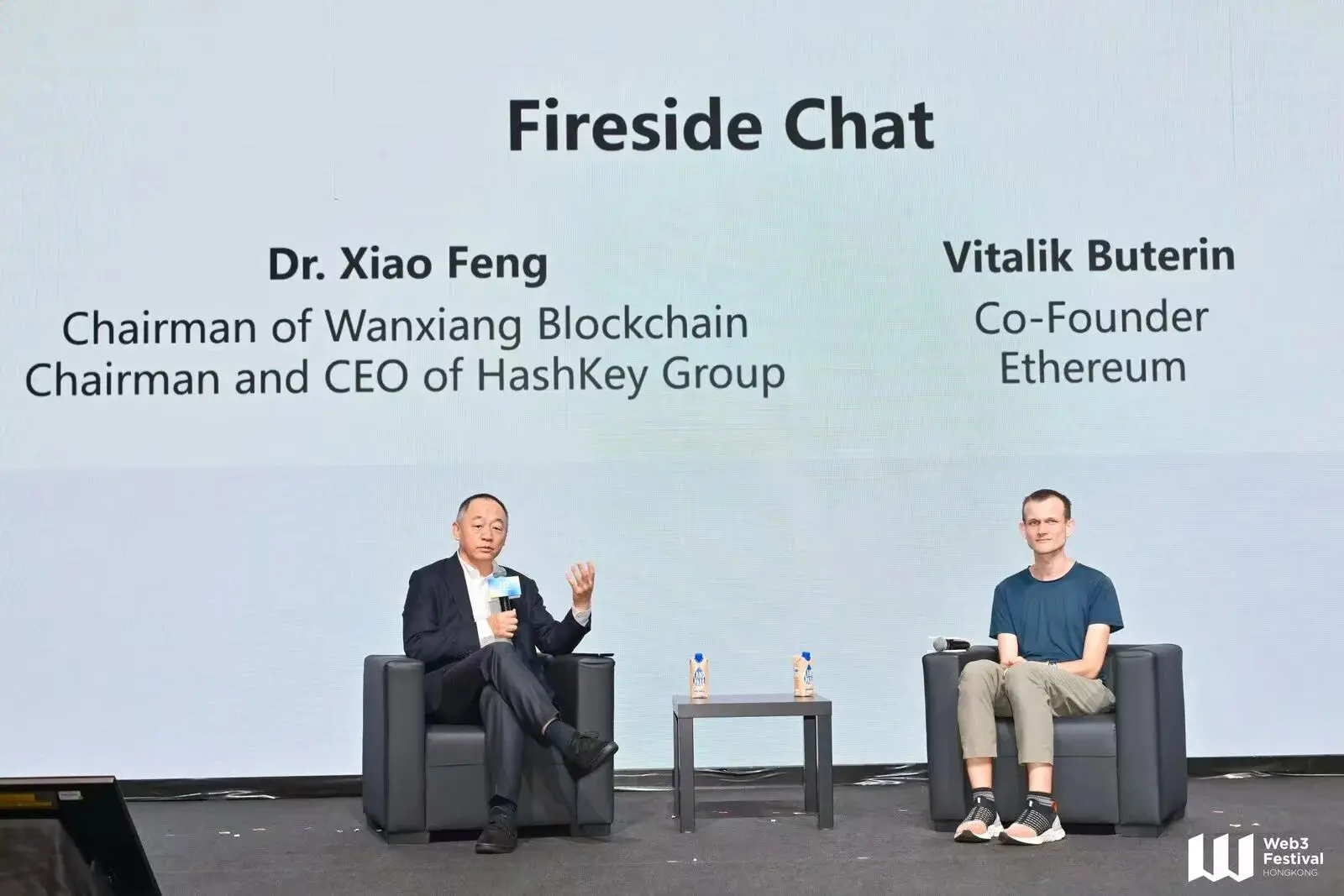
ChainCatcher reported live that HashKey Group Chairman Xiao Feng shared a keynote speech titled "Innovation of Economic Models for Intelligent Agents—The Fusion Revolution of AI Tokens, Blockchain Tokens, and Fully Homomorphic Encryption" at this year's 2026 Hong Kong Web3 Carnival. He pointed out that the two major business characteristics of blockchain technology are trustlessness and permissionlessness, but public transparency leads to data exposure, making it difficult for compliant institutions like banks to directly go on-chain. With fully homomorphic encryption chips expected to be launched in the second half of this year, achieving performance of about 1000 transactions per second, privacy computing technology is about to reach commercial thresholds.He proposed that the fusion of AI Tokens, blockchain Tokens, zero-knowledge proofs, and fully homomorphic encryption technology is the ultimate form of the intelligent agent economy. He used hospitals as an example: medical data, after being fully homomorphically encrypted, becomes Tokens, and anyone can call the data for computation through the blockchain in a permissionless manner, but cannot access personal privacy information, thus turning hospitals into "Token factories." Individuals can also put their encrypted health check data on-chain, issuing demands to global insurance companies, which can calculate and provide personalized optimal insurance plans in an encrypted state using their actuarial models, eliminating the need for insurance brokers and intermediaries.He specifically corrected a common misunderstanding: AI Tokens are not the currency unit of the intelligent agent economy, but rather the means of production, encompassing everything from electricity, chip computing power, to large models, algorithms, and applications, depicting the production process of intelligent agents. The currency of the intelligent agent economy must be programmable, divisible, and capable of real-time settlement, because when AI Agents call APIs, they may only need a few cents each time, and the costs of existing banking payment systems cannot support such small payments. Digital currency is the "blood" of the intelligent agent economy, and a brand new financial service system designed for machines rather than humans will definitely emerge in the future.
app_icon
ChainCatcher Building the Web3 world with innovations.