Scan to download
BTC $76,951.25 -1.41%
ETH $2,279.79 -2.87%
BNB $622.17 -1.63%
XRP $1.39 -2.81%
SOL $84.11 -2.80%
TRX $0.3248 +0.40%
DOGE $0.0973 -1.55%
ADA $0.2447 -2.96%
BCH $451.67 -0.05%
LINK $9.19 -3.03%
HYPE $41.79 +1.13%
AAVE $97.24 +1.52%
SUI $0.9222 -2.54%
XLM $0.1653 -3.30%
ZEC $354.32 +0.08%
BTC $76,951.25 -1.41%
ETH $2,279.79 -2.87%
BNB $622.17 -1.63%
XRP $1.39 -2.81%
SOL $84.11 -2.80%
TRX $0.3248 +0.40%
DOGE $0.0973 -1.55%
ADA $0.2447 -2.96%
BCH $451.67 -0.05%
LINK $9.19 -3.03%
HYPE $41.79 +1.13%
AAVE $97.24 +1.52%
SUI $0.9222 -2.54%
XLM $0.1653 -3.30%
ZEC $354.32 +0.08%

block

Bitget launches the first course of the Blockchain4Youth Learning Center, collaborating with Bondex to build a Web3 talent channel

Bitget officially launched the "Blockchain4Youth Learning Center" with its first course, aimed at providing a systematic blockchain learning path for young people and further connecting knowledge learning with career development. After completing the course and passing the assessment, students will receive a certificate of completion issued by Bitget's Chief Marketing Officer Ignacio Aguirre Franco, serving as an official certification of their Web3 capabilities. Certificate holders can gain more industry exposure and priority employment opportunities among the partner employers of the Blockchain4Youth Talent Alliance.To bridge the gap from learning to employment, Bitget has partnered with the Web3 recruitment platform Bondex to provide students with a transparent job-seeking channel and a talent pool connection mechanism. Bondex co-founder Ignacio Palomera stated that the project aims to address the real issues faced by learners, such as "lack of industry connections after completing the course, insufficient effective certification, and unclear job-seeking paths," building a more direct bridge between young talent and recruiting companies.So far, the Bitget Blockchain4Youth series of projects has attracted over 15,000 young participants. Bitget CMO Ignacio Aguirre Franco pointed out that the goal of the learning center is to transform young people's interest in Web3 into a tangible entry path. As the program continues to advance, Blockchain4Youth is gradually evolving from a single event project into a long-term infrastructure focused on Web3 education, career guidance, and talent development.

Illustration: Fireblocks' 30 Web3 business partners: Who is driving the $200 billion stablecoin flow?

The Web3 asset data platform RootData has outlined 30 business partners of Fireblocks, spanning multiple key areas such as DeFi protocols, payment settlement, compliance analysis, trading institutions, and multi-chain infrastructure:Settlement Layer: Represented by Circle, TripleA, and Lynq, responsible for stablecoin issuance and payment clearing.Liquidity and Trading Layer: Includes market makers and trading institutions such as Wintermute, Amber Group, GSR, and Wootton, responsible for fund distribution and market depth.On-chain Application Layer: Covers DeFi and application tools like Aave, Morpho, and MetaMask, which support the actual operation scenarios of funds.Compliance and Risk Control Layer: Service providers like Chainalysis, Elliptic, and Coincover form an important supplement to its regulatory adaptation capabilities.By 2025, Fireblocks is expected to handle over $200 billion in stablecoin transactions per month, a year-on-year increase of 300%. Fireblocks' positioning is evolving from a "custody and security service provider" to a central hub for on-chain fund flows and institutional asset circulation.Currently, Fireblocks supports over 150 public blockchain networks, and its partnership network has expanded to over 2,500 global institutional participants, including banks, asset management firms, exchanges, market makers, and fintech companies. Related compilation: Fireblocks Web3 Partner Network Compilation (Continuously Updated)Cryptocurrency projects actively showcasing their partner networks have become a key way to enhance transparency and market trust. It is reported that RootData welcomes Web3 project parties to claim information and continues to track and open more project business relationship disclosure channels. The platform has continuously released multiple issues of the cryptocurrency project ecosystem map, nominating Web3 ecosystem partners for upstream clients such as Visa, Mastercard, and Coinbase.If you wish to nominate your project in future ecosystem maps, please fill out the RootData 2026 Industry Ecosystem Mapping form to supplement your important clients and partners.

Cantor Fitzgerald raises target prices for Strategy, Robinhood, and Block, while cryptocurrency concept stocks decline against the trend

According to BBX data, yesterday Cantor Fitzgerald raised the target prices for multiple cryptocurrency concept stocks on the same day, but stock prices remained generally under pressure. The core dynamics are as follows:Cantor Fitzgerald analyst Ramsey El-Assal released a research report on April 21, maintaining an "Overweight" rating for Strategy, Inc. (NASDAQ: $MSTR), Robinhood Markets, Inc. (NASDAQ: $HOOD), and Block, Inc. (NYSE: $XYZ), and raised the target prices to $212 (from $192), $110 (from $95), and $88 (from $78), respectively. El-Assal stated that the market is viewing the Q1 earnings report as "rearview mirror data" and is shifting attention to forward-looking growth drivers such as market predictions and tokenization. Despite the collective increase in target prices, the three stocks closed down approximately 2.78%, 4%, and 2% yesterday, reflecting the dual impact of macro sentiment suppression and geopolitical uncertainty.Circle Internet Group, Inc. (NYSE: $CRCL) closed yesterday (April 21) at about $97, with a decline of approximately 4.6% on the day, corresponding to a market capitalization of about $24 billion; the stock's 52-week low was $49.90 (on February 5), and it has rebounded approximately 95% from that low; Q1 2026 earnings report is expected to be released on May 11, with consensus revenue expectations for Q2 at about $718 million.

Jefferies: Kelp DAO security incident may slow down Wall Street's blockchain layout

Jefferies, a Wall Street investment bank, pointed out that the approximately $293 million attack incident on Kelp DAO exposed critical infrastructure risks, which may prompt traditional financial institutions to reassess the pace of blockchain and tokenization advancement.Jefferies believes that the attackers triggered market sell-offs and liquidity strains by minting uncollateralized tokens and engaging in cross-platform lending. This incident is thought to be related to the Lazarus Group and also highlights the single point of failure issues in the verification mechanisms of cross-chain bridges. As institutions accelerate the tokenization of assets (such as funds, bonds, and deposits), the associated risks may cause some banks and asset management institutions to delay deployment and prioritize examining system security. Especially in scenarios that rely on cross-chain infrastructure, security vulnerabilities could lead to market fragmentation, undermining the practical utility of tokenized assets.Despite short-term confidence being shaken, Jefferies still emphasizes that the long-term trend remains unchanged. Under the backdrop of regulatory advancements and continuous improvements in infrastructure, applications such as stablecoins still have growth potential. However, the industry as a whole is still in the early stages of development and requires time to enhance system robustness.

first_img HK Web3 Feastival Roundtable: From Wall Street to Blockchain, the Practical Logic and Future Vision of Global RWA Issuance

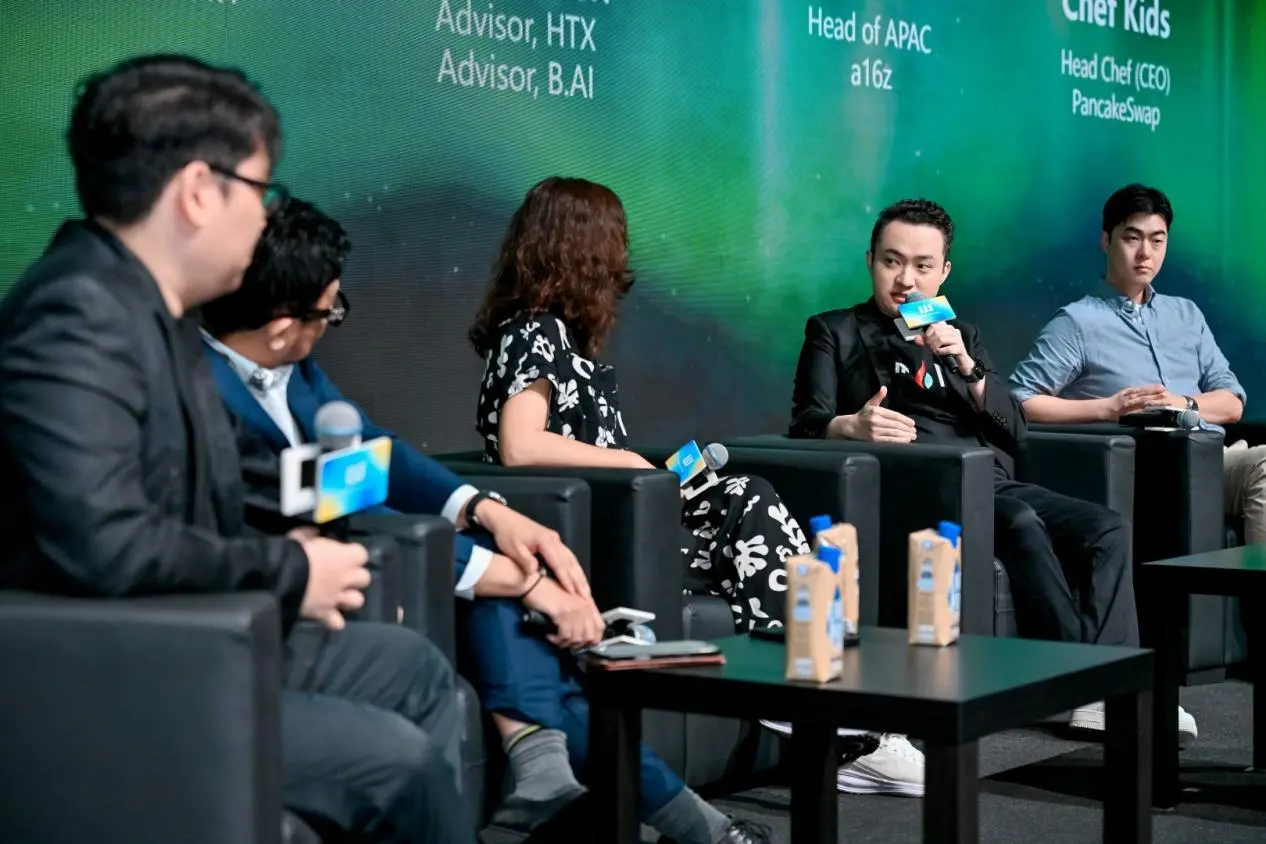
ChainCatcher reported live that Li Baiwei, Partner at HashKey Tokenisation, John Cahill, Chief Operating Officer of Galaxy Digital Asia, Abdelhamid Bizid, Managing Director of BlackRock, and Min Lin, Managing Director and Head of Global Business Development at Ondo Finance, attended the HK Web3 Feastival roundtable to share insights on "From Wall Street to Blockchain: The Practical Logic and Future Landscape of Global RWA Issuance."The attendees generally agreed that the core value of RWA and asset tokenization is no longer just an innovative narrative at the conceptual level, but a realistic path for upgrading financial market infrastructure. John Cahill stated that blockchain is essentially a superior "underlying pipeline" for financial markets, and in the long run, the ultimate goal of financial markets will be "tokenization of everything"; what truly needs attention is not whether tokenization will happen, but whether market participants have already begun preparing for this endgame.Abdelhamid Bizid pointed out that from the perspective of traditional asset management institutions, the current tokenized products primarily serve clients who do not wish to move funds out of the on-chain ecosystem but want to achieve stable returns and compliant asset allocation tools. BlackRock has seen a clear demand for on-chain yield products and will continue to launch more new products. However, he also emphasized that the real bottleneck in the industry at this stage is not technology, but rather institutional adoption, demand validation, liquidity depth, regulatory clarity, and non-technical barriers such as costs and taxation.Min Lin, drawing from Ondo's practice, stated that the key to tokenized stocks is not just moving U.S. stocks onto the blockchain, but transforming stocks that are originally static in brokerage accounts into programmable financial instruments that can serve as collateral, margin, and lending assets in DeFi, further unlocking capital efficiency. He mentioned that the main demand currently observed by Ondo still comes from retail and crypto-native funds in regions like Asia, Southeast Asia, and Latin America, which find it difficult to directly access the U.S. stock market. This indicates that tokenized stocks at this stage are more like "global asset access tools" rather than mainstream trading venues for institutional funds.
app_icon
ChainCatcher Building the Web3 world with innovations.