Scan to download
BTC $77,747.35 -0.33%
ETH $2,316.15 -0.71%
BNB $626.54 -0.79%
XRP $1.41 -1.01%
SOL $85.08 -1.33%
TRX $0.3252 +0.56%
DOGE $0.0982 -0.48%
ADA $0.2472 -2.36%
BCH $448.45 -0.86%
LINK $9.32 -1.61%
HYPE $42.16 +2.47%
AAVE $95.95 +0.37%
SUI $0.9285 -1.90%
XLM $0.1671 -2.74%
ZEC $359.29 +2.41%
BTC $77,747.35 -0.33%
ETH $2,316.15 -0.71%
BNB $626.54 -0.79%
XRP $1.41 -1.01%
SOL $85.08 -1.33%
TRX $0.3252 +0.56%
DOGE $0.0982 -0.48%
ADA $0.2472 -2.36%
BCH $448.45 -0.86%
LINK $9.32 -1.61%
HYPE $42.16 +2.47%
AAVE $95.95 +0.37%
SUI $0.9285 -1.90%
XLM $0.1671 -2.74%
ZEC $359.29 +2.41%

decentralization

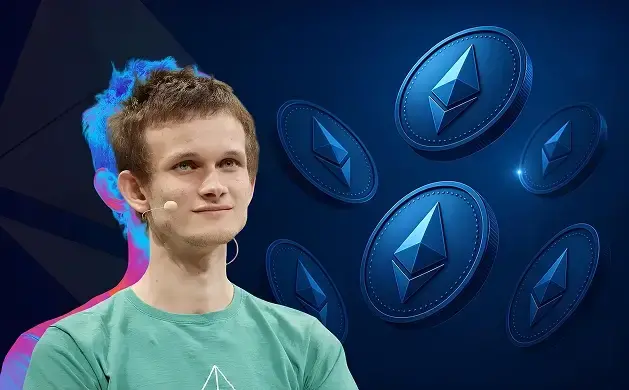
first_img Vitalik Buterin: Ethereum does not pursue speed but aims to become the safest chain, achieving ZKVM dominant verification before 2028

ChainCatcher reports live from the 2026 Hong Kong Web3 Carnival, where Ethereum co-founder Vitalik Buterin delivered a keynote speech. He defined Ethereum by two core functions: first, as a public bulletin board for applications to publish messages and data; second, as shared digital objects controlled by code, encompassing assets, NFTs, ENS, and DAOs. He emphasized that Ethereum's goal is not to compete with high-frequency trading platforms on speed, but to become the most secure, decentralized, and always-online trusted chain.Regarding the short-term roadmap, he introduced the account abstraction proposal EIP-8141, which natively supports smart contract wallets, quantum-resistant signature algorithms, and privacy protocols; in terms of quantum resistance, there are currently two signature schemes based on hash and lattice, and the team is significantly enhancing their efficiency through EVM vectorization.He revealed that ZKVM is fast enough to prove real-time EVM execution, with this year's goal being to ensure its security, planning to start deployment from a small proportion of the network, aiming to become the primary method of validation by 2028, allowing Ethereum to scale significantly without sacrificing decentralization. In terms of long-term vision, Ethereum is actively utilizing AI to generate mathematical proofs to formalize software security verification, pursuing complete quantum safety and maximum simplicity to ensure platform security does not rely on the continuous existence of any single team.

Vitalik proposed the latest vision for the integration of Ethereum and AI, along with four short-term building directions

Ethereum co-founder Vitalik Buterin elaborated on his latest views regarding the integration of Ethereum and artificial intelligence. He pointed out that the ideal future of artificial intelligence should achieve two core goals: first, to enhance human freedom and empowerment, avoiding the replacement of humans by AI or entrapment in insurmountable power structures; second, to ensure system security, mitigating existential risks posed by superintelligence and chaotic scenarios resulting from imbalances in offense and defense.Around this vision, he proposed four key short-term building directions and emphasized that Ethereum will play an important role in them:Build technological tools that support trustless and private interactions, including local large language models, zero-knowledge proof-based API payments, cryptography-driven privacy enhancement solutions, and client-side verification mechanisms for various proofs and certifications.Establish Ethereum as the economic coordination layer for AI-related interactions, supporting scenarios such as API calls, employment and collaboration between autonomous robots, margin mechanisms, and potential future on-chain dispute resolution systems and AI reputation frameworks.Promote the realization of the cypherpunk vision of "self-verification," enabling users to interact directly with Ethereum applications through local models, autonomously generate and verify transactions, complete smart contract audits, and independently assess the trust models of decentralized applications.Leverage artificial intelligence to expand the scale of human judgment and collaboration, activating complex mechanisms such as prediction markets, decentralized governance, and quadratic voting, to build a more efficient and inclusive market and governance ecosystem.Vitalik concluded that the aforementioned directions reflect the idea of achieving decentralized collaboration and system resilience through technology, and combined with AI and cryptographic techniques, they are expected to push social and economic designs, previously limited by human cognitive and coordination capabilities, towards reality.

Vitalik: The Ethereum Foundation has entered a "moderate tightening period" and has withdrawn 16,384 ETH for long-term core missions

Vitalik Buterin posted on the X platform that in the next five years, the Ethereum Foundation (EF) will enter a period of "moderate tightening" to achieve two main goals: first, to deliver a more aggressive technical roadmap that ensures Ethereum continues to be a high-performance, scalable "world computer" without sacrificing robustness, sustainability, and decentralization; second, to enhance the long-term sustainability of the Ethereum Foundation itself, safeguarding Ethereum's core mission, including the foundational blockchain layer and users' ability to use the network under the premises of security, privacy, and self-sovereignty.Vitalik pointed out that as part of the tightening plan, he will personally take on some work that might have been handled by the Foundation's "special projects," focusing on supporting an open, verifiable, end-to-end hardware and software technology stack to protect personal lives and public environments. This technological vision encompasses finance, communication, governance, blockchain, operating systems, secure hardware, and biotechnology (personal and public health), emphasizing privacy protection, decentralization, and a locally prioritized software architecture.To this end, Vitalik has extracted 16,384 ETH and plans to gradually invest in the aforementioned goals over the coming years while exploring safer decentralized staking solutions to use staking rewards long-term to support related missions. He emphasized that Ethereum itself is an indispensable part of the "full-stack openness and verifiability" vision.The Ethereum Foundation will continue to focus on core Ethereum development, but the priority is not "Ethereum everywhere," but rather "Ethereum for people who need it," serving self-sovereignty, security, and privacy, rather than catering to centralized corporate demands. Vitalik stated that in an increasingly "might makes right" world, this path offers a necessary alternative—building an uncontrollable collaborative infrastructure through truly open, verifiable, and user-serving technology.

Vitalik proposed to introduce a native DVT staking mechanism at the Ethereum protocol layer to enhance security and decentralization

Ethereum co-founder Vitalik Buterin recently proposed a "native DVT (Distributed Validator Technology)" solution at the Ethereum Research forum, suggesting that DVT be directly integrated into the Ethereum staking protocol layer to enhance network security while promoting decentralization at the validator level.According to the proposal, validators can register multiple independent keys and operate collectively in the form of "grouped validators"; only when a set threshold number of key signatures is reached will the block proposal or witness be considered valid. This mechanism can significantly reduce the risk of single points of failure or validators going offline due to node breaches, while still maintaining existing slashing protections under reasonable threshold settings.Vitalik pointed out that, unlike current DVT solutions that rely on external coordination layers and complex deployments, native DVT will be directly embedded into the protocol itself. Validators holding multiple minimum staking thresholds (32 ETH) can set up to 16 keys and specify a signature threshold, effectively allowing multiple standard nodes to collectively form a single validator identity. He noted that the additional performance overhead of this design is minimal, only adding one extra delay for block production without affecting witness delays, and is compatible with any signature scheme, helping to reduce reliance on long-term potentially risky cryptographic assumptions.On the decentralization front, Vitalik believes that native DVT will enable individuals and institutions to participate in staking more easily in a "self-custodial, fault-tolerant" manner, rather than relying on large staking service providers, thereby improving the decentralization metrics of the Ethereum validator set (such as the Nakamoto coefficient). The proposal is still in the early discussion stage and will require extensive evaluation and consensus from the Ethereum community moving forward.

Vitalik: Plans to fully return to decentralized social in 2026, competition and decentralization are the starting points for improving public discourse

Vitalik Buterin stated that he plans to fully return to decentralized social networks in 2026, believing that if we want to build a better society, we must have better large-scale communication tools. These tools should help people filter high-quality information and opinions, find consensus, and serve the long-term interests of users rather than maximizing short-term interactions and emotional conflicts.Vitalik pointed out that there is no "one-size-fits-all" solution to the above problems, but enhancing competition is an important starting point, and decentralization is the key path to achieving competition: by sharing a data layer that allows anyone to build different clients on top of it. He revealed that since the beginning of this year, he has started using decentralized social tools for reading and posting, with all content synchronized across platforms like X, Lens, Farcaster, and Bluesky through Firefly.He also criticized some crypto social projects for deviating from their original intentions, overly viewing "token issuance" as innovation, and attempting to create price bubbles around individuals to incentivize creators. However, practice shows that such models often reward existing social capital rather than content quality, and the lifecycle of tokens is short. Vitalik emphasized that money and social interaction are not inherently in conflict; the key is whether they truly serve the content itself, such as through subscription-based support models rather than speculative asset designs.In his view, decentralized social should be driven by teams that genuinely care about the "essence of social interaction." Vitalik acknowledged the Aave team's previous long-term maintenance of Lens and expressed anticipation for the direction of the new team, believing they are more focused on solving real social problems. He stated that in the coming year, he will speak more on decentralized social platforms and encourage more users to participate in ecosystems like Lens and Farcaster, breaking free from the information adversarial environment of a single platform and exploring new forms of interaction.
app_icon
ChainCatcher Building the Web3 world with innovations.