Scan to download
BTC $76,730.48 -1.84%
ETH $2,288.38 -3.02%
BNB $622.80 -1.65%
XRP $1.39 -2.36%
SOL $84.52 -2.56%
TRX $0.3256 +0.46%
DOGE $0.0979 -1.37%
ADA $0.2458 -2.68%
BCH $448.60 -0.93%
LINK $9.24 -2.66%
HYPE $41.76 +0.38%
AAVE $96.30 -0.99%
SUI $0.9260 -2.12%
XLM $0.1648 -3.55%
ZEC $355.15 +0.04%
BTC $76,730.48 -1.84%
ETH $2,288.38 -3.02%
BNB $622.80 -1.65%
XRP $1.39 -2.36%
SOL $84.52 -2.56%
TRX $0.3256 +0.46%
DOGE $0.0979 -1.37%
ADA $0.2458 -2.68%
BCH $448.60 -0.93%
LINK $9.24 -2.66%
HYPE $41.76 +0.38%
AAVE $96.30 -0.99%
SUI $0.9260 -2.12%
XLM $0.1648 -3.55%
ZEC $355.15 +0.04%

core

Lido discloses the impact of the Kelp security incident: approximately 9% of EarnETH exposure affected, core staking assets are secure

Lido has released the latest developments regarding the Kelp security incident, stating that its Earn series vaults are working with the management to address the issues, which involve two major risk points: the rsETH exposure and the liquidity tension in the lending market. Lido emphasizes that the core staking protocol has not been affected, and both stETH and wstETH remain safe and stable.Currently, only the EarnETH vault has an approximately 9% TVL exposure to rsETH, and related deposits and withdrawals have been suspended by the management, awaiting a solution. Approximately $70 million in ETH has been recovered from the previous attack, and the subsequent asset recovery and loss distribution are still in progress. In response to liquidity pressure, the management has reduced leverage and optimized the position structure, significantly decreasing the wETH debt exposure. If losses ultimately occur, EarnETH will activate a $3 million "first loss protection mechanism" (funded by the DAO). As for other vaults, DVV and EarnUSD have not been affected and are operating normally; the GGV sub-vault is currently experiencing negative returns due to the combination of circular staking strategies and rising lending rates, but adjustments are ongoing. Withdrawal requests submitted by users will be processed based on valuations prior to the incident.

Sun Yuchen appeared online at the HTX Genesis Hackathon: AI Agent is the core driving force for Web3 to move towards intelligence

Huobi HTX global advisor Sun Yuchen made a significant appearance at the HTX Genesis Hackathon opening ceremony in Hong Kong in an online format, sharing his latest insights on the application prospects of AI Agent technology in the Web3 field and the future development direction of the industry. He pointed out that AI Agent will replace traditional interaction methods and become the core driving force of the next phase of the Web3 ecosystem.He explained that past Web3 applications often came with extremely high learning thresholds and complex on-chain interactions, while the introduction of AI Agent will drive decentralized applications (DApps) to evolve from "manual operation" to "intention-driven" based on natural language. This means that AI Agents can autonomously understand user needs, automatically plan paths, and complete complex on-chain settlements such as cross-chain transactions. This paradigm shift towards intelligence and autonomy will not only greatly unleash on-chain productivity but also become a new breakthrough point to break the bottleneck of Web3 user growth and lead the industry toward true mass adoption.It is reported that the HTX Genesis Hackathon is hosted by HTX DAO and B.AI, co-hosted by TinTinLand and OpenCity, attracting numerous developer communities, investment institutions, project parties, trading platforms, and public chain ecosystems to participate.

ChainCatcher "From Cryptocurrency to Smart Economy" Roundtable: Crypto is shifting from speculation to practical value, with compliant RWA and AI payments becoming the core engine of the new cycle

At the "Crypto 2026: From Cryptocurrency to Smart Economy" themed forum held in Hong Kong, guests including Sign partner Sarah, HashKey Chain Senior Business Development YuYi, Monad Greater China Ecosystem Head Harvey Chen, OmenX Chief Marketing Officer Gisele, and SVP Chain Market Head Celest engaged in a roundtable discussion on "The Revaluation of Crypto and the New Cycle."Regarding why they remain firmly invested in Crypto amid the AI boom, Sarah pointed out that the hotter AI gets, the more use cases there are for Crypto assets, and future transactions between AI Agents will rely on digital assets. YuYi believes that the bear market is precisely when the wheat is separated from the chaff, with compliant RWA (such as Hong Kong's first physical silver token) being implemented, speculative assets being eliminated, and the era of on-chain infrastructure arriving. Harvey Chen stated that high-performance public chains are the foundation for supporting large-scale applications, and Monad is committed to this. Gisele noted that Crypto addresses fairness and value transfer, complementing AI's focus on efficiency. Celest emphasized that AI lacks a native value system and increasingly requires Crypto to provide value authentication and decentralized trust.On the changing understanding of Crypto's value, the guests unanimously agreed that the industry is shifting from "issuing tokens for the sake of issuing tokens" to pursuing sustainable business models, with greater focus on capital efficiency, low costs, and 24-hour settlement as practical values. The value of public chains should be assessed based on real business scenarios and user transaction volumes, rather than narratives and financing.Regarding future growth engines and entrepreneurial advice, the guests generally expressed optimism about compliant RWA, AI payments, and sovereign blockchain directions, advising entrepreneurs to focus on real application scenarios, avoid empty concepts, and maintain a long-term construction mindset.

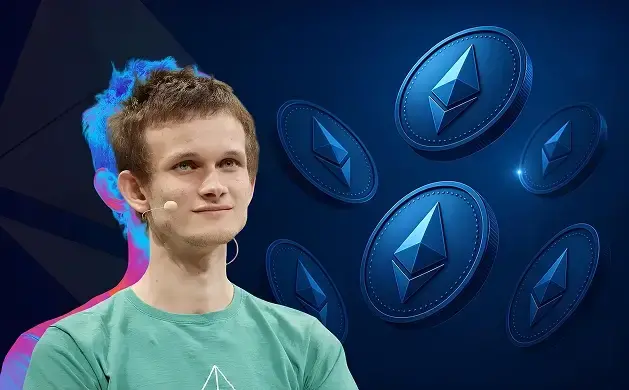
Core member of the Ethereum Foundation, Josh Stark, will be leaving, having led several major upgrades including The Merge

According to The Block, Josh Stark, a key figure at the Ethereum Foundation (EF), announced his resignation after five years and will officially step down at the end of the month. Stark joined the Ethereum Foundation in 2019, initially working in the special projects team, and later rose to leadership, collaborating with EF Chair Aya Miyaguchi, Ethereum founder Vitalik Buterin, and co-executive directors Hsiao-Wei Wang and Bastian Aue.He is one of the most prominent members of the foundation's external image and has led several significant advancements in Ethereum, including the "The Merge" upgrade that transitioned from proof of work to proof of stake, as well as subsequent upgrades like Dencun, Fusaka, and Pectra. During last year's leadership adjustments at the foundation, he was appointed as the "co-manager" of the EF board and recently took on the role of co-chair of the "trillion-dollar security" initiative.Last month, Stark co-authored a strategic blog post on Ethereum with Josh Rudolf and Julian Ma, outlining Ethereum's latest scaling direction and its relationship with the Layer 2 ecosystem. Stark stated, "I haven't planned for the future yet; I just want to take a good rest and spend time with family and friends." This resignation occurs against the backdrop of ongoing changes at the Ethereum Foundation.Last year, the foundation underwent significant leadership adjustments, refocusing its strategic priorities on scaling the Ethereum mainnet and core cypherpunk values; Tomasz K. Stańczak also resigned from his co-executive director position at the end of February this year, having served for less than a year. On the same day, Trent Van Epps also announced his departure from EF to fully dedicate himself to Protocol Guild, the independent funding organization for Ethereum core developers that he founded.

J.P. Morgan: Negotiations on the CLARITY Act have entered the final stage, with disputes narrowed down to 2-3 core issues

JPMorgan analysts have stated that negotiations for the U.S. "Cryptocurrency Market Structure Act" (i.e., the CLARITY Act) have entered the final stages, with both sides reaching compromises on a few remaining contentious points. The number of disputes has been reduced from over a dozen to 2-3 core issues, with discussions on stablecoin rewards being "in a good place." While banks express concerns about stablecoins offering similar yields to deposits, there is an overall bipartisan compromise trend. JPMorgan believes that "there is no perfect bill," and once passed, the bill will provide important regulatory clarity for the integration of digital assets into the U.S. financial system.The "Cryptocurrency Market Structure Act" is currently in advanced negotiations in the U.S. Senate, with Senate staff stating that the draft is "very close" to resolution, but the final text has not yet been released, nor has a formal vote been scheduled. The remaining major disagreements focus on stablecoin rewards, DeFi regulation, and token classification issues. Although optimism is rising, there is still a risk of delays due to the 2026 midterm elections, which could lead to a more uncertain political environment. If the bill is ultimately passed, it will delineate the regulatory authority between the SEC and CFTC, providing a long-term regulatory framework for stablecoins, DeFi, and the entire cryptocurrency industry.
app_icon
ChainCatcher Building the Web3 world with innovations.